This section publishes expert opinions the Geneva Dialogue contributors, alongside podcast conversations that deepen discussion on key topics.
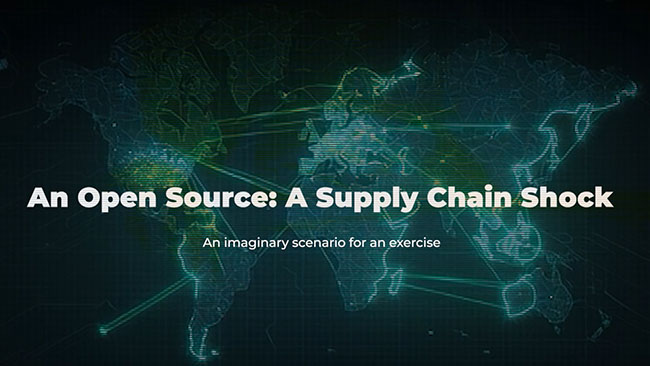
When the code is everyone’s, who is responsible for its security? And do UN cyber norms have anything to say about it?
Anastasiya Kazakova (Cyber Diplomacy Knowledge Fellow and Geneva Dialogue Project Coordinator, DiploFoundation).
Quantum computing and cyber risks: Are we separating signal from noise?
By Serge Droz (Senior technical advisor, Swiss Federal Department of Foreign Affairs), in conversation with Anastasiya Kazakova (Cyber Diplomacy Knowledge Fellow and Geneva Dialogue Project Coordinator, DiploFoundation).
Speed, scale, and blind spots: Stress-testing cyber stability in the age of AI
By Donavan Cheah (Senior Cybersecurity Consultant, Thales), in conversation with Anastasiya Kazakova (Cyber Diplomacy Knowledge Fellow and Geneva Dialogue Project Coordinator, DiploFoundation).
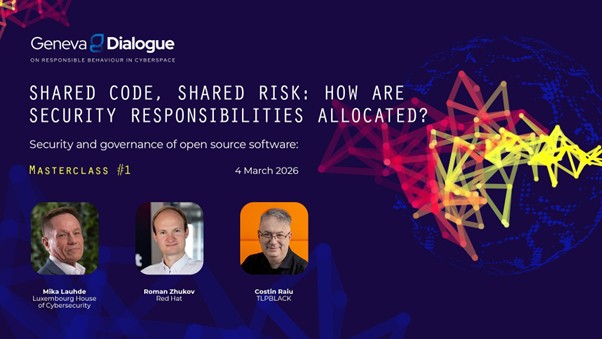
Who owns the risk? Open source security and the accountability gap
Reflections from the Geneva Dialogue Masterclass #1 (2026) on the Security and Governance of Open Source Software

How Open Source Coordinates: A Guide for Policy Makers
Understanding horizontal governance in the FOSS ecosystem
Mirko Boehm, Senior Director for Community Development, Linux Foundation Europe
Free and open source software (FOSS) sustains global infrastructure but resists centralized control. Coordination occurs through dependencies, open governance, and self-organizing communities. These structures create opportunities for standards and innovation, yet limit direct policy influence. Effective engagement requires adapting to horizontal collaboration rather than imposing hierarchy.

Who Shapes Power in the Digital Age?
Ambassador Asoke Mukerji, former Permanent Representative of India to the United Nations and distinguished Diplo lecturer
This keynote was delivered during the Geneva Dialogue course session on 4 December 2025......
Bridging the gaps: Why NIS2 Is more than just compliance
Sofia Martinez Gomez, Cybersecurity Expert, AlixPartners
Earlier this year, Huawei organised the Cyber Security Forum at its Brussels-based Cyber Security Transparency Center, where I had the opportunity to explore the evolving landscape of cybersecurity regulation—specifically the NIS2 Directive—and share what it really means for organizations today.....
Recalibration of international order: Growing sovereignty in a multipolar and multistakeholder cyberworld
Anastasiya Kazakova, Cyber Diplomacy Knowledge Fellow, DiploFoundation
In 2017 Richard Haass called for a new world order 2.0 that is based on ‘sovereign obligation’, the notion that sovereign states have not just rights, but also obligations to others....

Exploring the Challenges and Solutions of Data Protection in AI
Igor Kumagin, Cybersecurity expert, Kaspersky
The appearance of new technology in our lives requires the re-evaluation of some basic concepts that have been established for a long time...
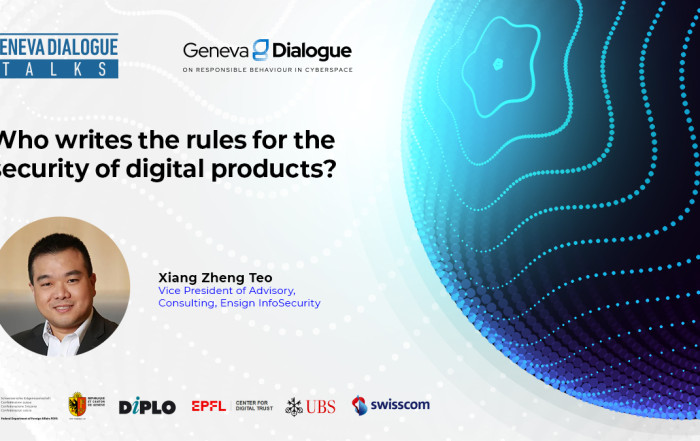
Rules for the security of digital products: Who should write them?
Xiang Zheng Teo, Ensign InfoSecurity
Anastasiya Kazakova, DiploFoundation
As users of numerous digital products – apps, smart devices etc. – we expect a certain level of security and safety while using those products, although we don’t know how secure they are and, what’s more, don’t often have easily accessible ways to acquire such knowledge.