Misa Stankovic

About Misa Stankovic

This author has not yet filled in any details.
So far Misa Stankovic has created 20 blog entries.

Critical infrastructure protection under stress: Do the boundaries still hold?

By |2026-09-11T15:39:28+02:00September 11th, 2026|Blog, Cyber diplomacy|

By Yang Jeong Yoon (National Security Research Institute (NSR), Republic of Korea) in conversation with Anastasiya Kazakova (Cyber Diplomacy Knowledge Fellow and Geneva Dialogue Project Coordinator, DiploFoundation).
Comments Off on Critical infrastructure protection under stress: Do the boundaries still hold?

The Vulnerability Nobody Meant to Find: How is AI-enabled Vulnerability Discovery Changing Our Understanding of Cyber Harm?

By |2026-09-08T18:05:44+02:00September 8th, 2026|Blog, Cyber diplomacy|

By Casey Ellis (Founder of Bugcrowd and The disclose.io Project) in conversation with Anastasiya Kazakova (Cyber Diplomacy Knowledge Fellow and Geneva Dialogue Project Coordinator, DiploFoundation).
Comments Off on The Vulnerability Nobody Meant to Find: How is AI-enabled Vulnerability Discovery Changing Our Understanding of Cyber Harm?

When the defender’s tool becomes the attacker’s weapon, how do you decide what responsible behaviour looks like?

By |2026-06-05T15:08:41+02:00June 5th, 2026|Blog, Cyber diplomacy|

Anastasiya Kazakova, Cyber Diplomacy Knowledge Fellow and Geneva Dialogue Project Coordinator, DiploFoundation.

Comments Off on When the defender’s tool becomes the attacker’s weapon, how do you decide what responsible behaviour looks like?

When the rules were written, this wasn’t the game:
Emerging technologies, cybersecurity, and the governance gap

By |2026-06-03T13:01:57+02:00June 3rd, 2026|Blog, Cyber diplomacy|

Reflections from the Geneva Dialogue Masterclass #2 — 2026 on Emerging Technologies and Cybersecurity

Comments Off on When the rules were written, this wasn’t the game:
Emerging technologies, cybersecurity, and the governance gap

A Warning Sign, Not a Breaking Point?

By |2026-06-03T13:03:11+02:00May 14th, 2026|Blog, Cyber diplomacy|

We brought together cybersecurity experts spanning technical research, policy, and civil society to examine the hype — and the substance — behind Mythos, Anthropic's recently unveiled AI model that has set the security community talking.

Comments Off on A Warning Sign, Not a Breaking Point?

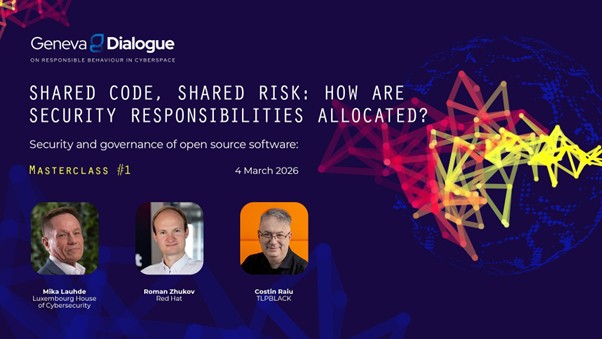
When the code is everyone’s, who is responsible for its security? And do UN cyber norms have anything to say about it?

By |2026-06-03T13:04:01+02:00April 3rd, 2026|Blog, Cyber conflict|

Anastasiya Kazakova (Cyber Diplomacy Knowledge Fellow and Geneva Dialogue Project Coordinator, DiploFoundation).
Comments Off on When the code is everyone’s, who is responsible for its security? And do UN cyber norms have anything to say about it?

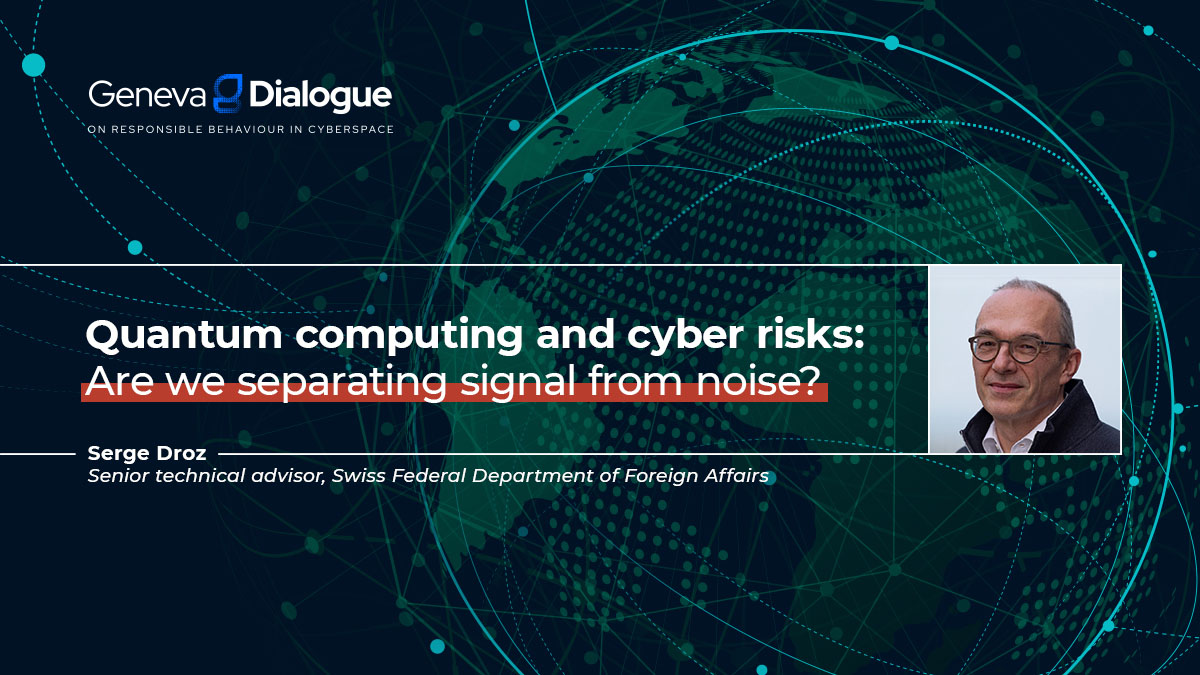
Quantum computing and cyber risks: Are we separating signal from noise?

By |2026-05-19T15:15:42+02:00March 31st, 2026|Blog, Cyber conflict|

By Serge Droz (Senior technical advisor, Swiss Federal Department of Foreign Affairs), in conversation with Anastasiya Kazakova (Cyber Diplomacy Knowledge Fellow and Geneva Dialogue Project Coordinator, DiploFoundation).
Comments Off on Quantum computing and cyber risks: Are we separating signal from noise?

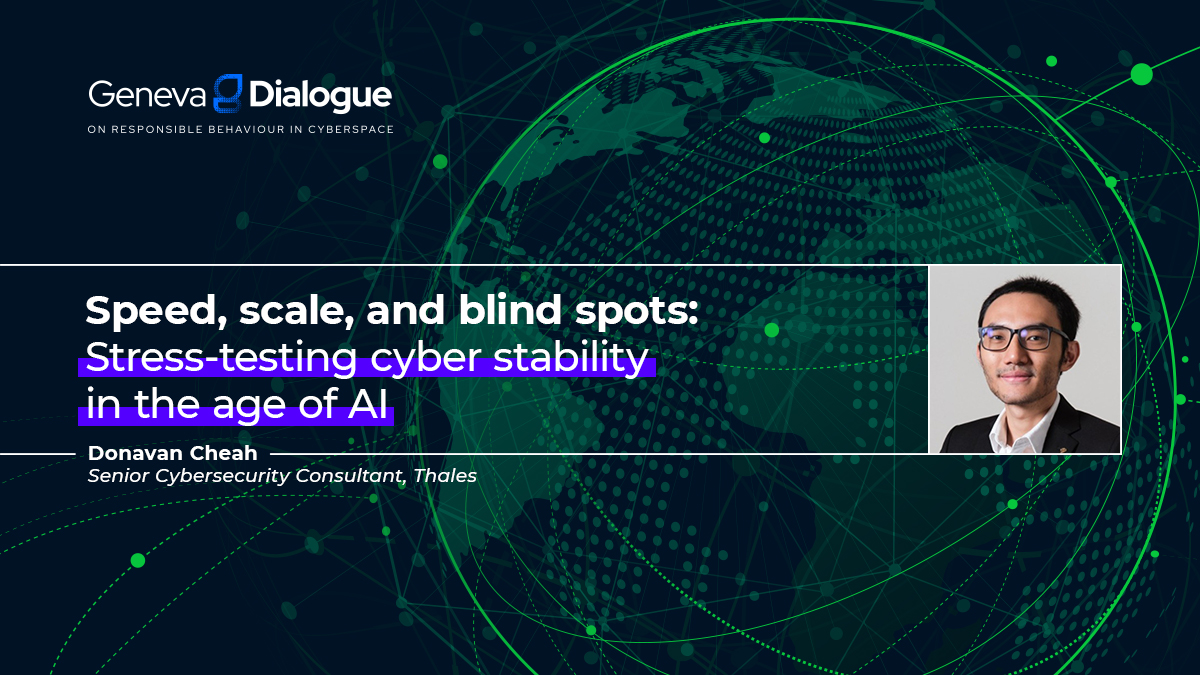
Speed, scale, and blind spots: Stress-testing cyber stability in the age of AI

By |2026-03-23T16:39:03+01:00March 23rd, 2026|Blog|

By Donavan Cheah (Senior Cybersecurity Consultant, Thales), in conversation with Anastasiya Kazakova (Cyber Diplomacy Knowledge Fellow and Geneva Dialogue Project Coordinator, DiploFoundation).
Comments Off on Speed, scale, and blind spots: Stress-testing cyber stability in the age of AI

How Open Source Coordinates: A Guide for Policy Makers
Understanding horizontal governance in the FOSS ecosystem

By |2026-02-02T11:40:11+01:00January 28th, 2026|Blog|

Mirko Boehm, Senior Director for Community Development, Linux Foundation Europe

Free and open source software (FOSS) sustains global infrastructure but resists centralized control. Coordination occurs through dependencies, open governance, and self-organizing communities. These structures create opportunities for standards and innovation, yet limit direct policy influence. Effective engagement requires adapting to horizontal collaboration rather than imposing hierarchy.

Comments Off on How Open Source Coordinates: A Guide for Policy Makers
Understanding horizontal governance in the FOSS ecosystem
Go to Top